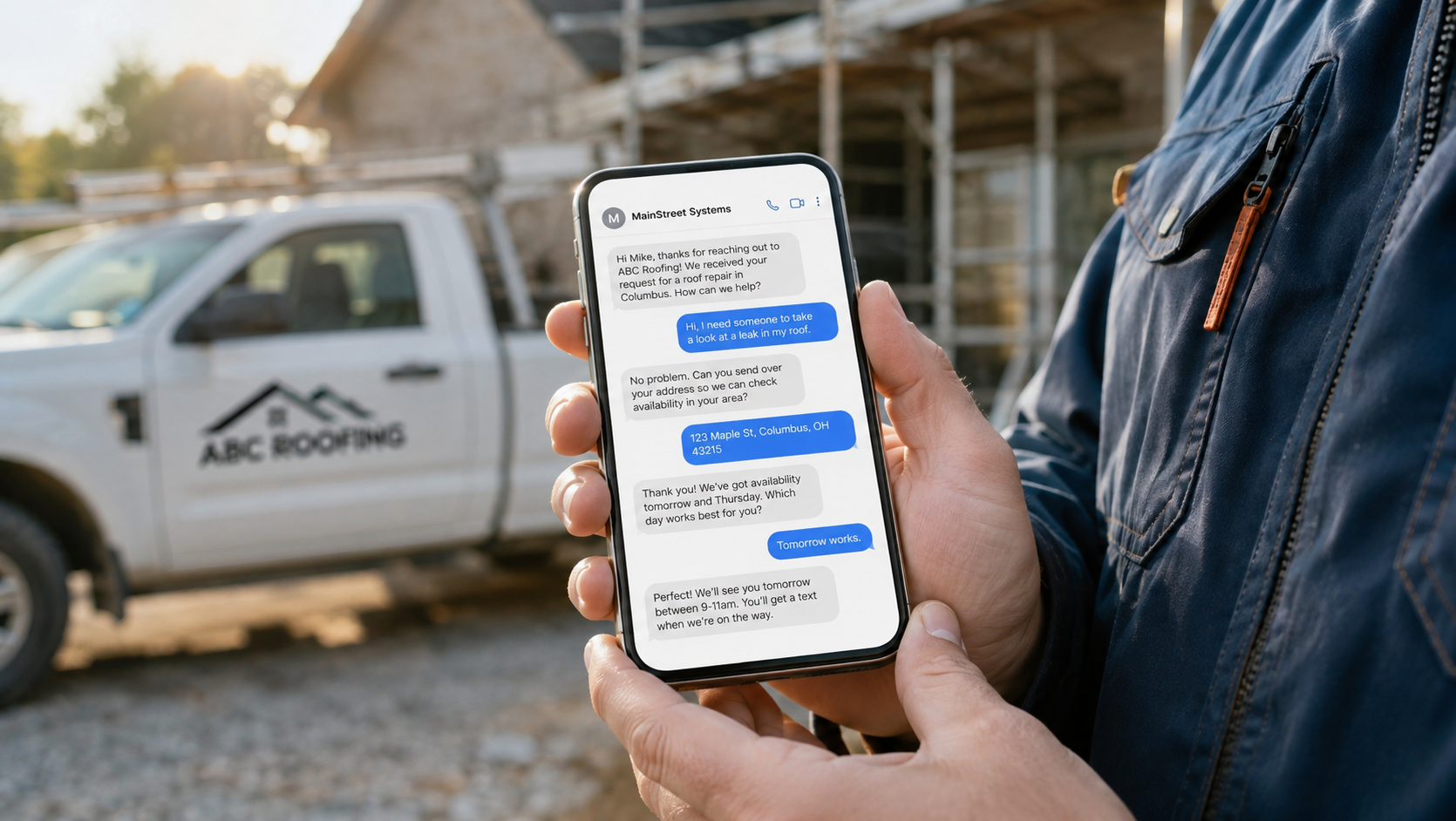
The fear about automation is reasonable. Nobody wants their company to sound like a spam bot, especially in a business built on trust and referrals. But the fix is not less automation. It is automating the right moments and keeping people where trust is actually built.
Think of it this way: automation should handle the parts of the conversation that are identical every single time, so your people have the time and context to handle the parts that never are.
Automate the predictable, not the personal
- Automate: instant lead acknowledgment, missed-call text-back, appointment confirmations and reminders, quote follow-up nudges, review requests after a completed job.
- Keep human: diagnosing the problem, pricing conversations, scope changes, objections, and anything involving an unhappy customer.
A missed-call text-back is a good example of the first group. A plumber under a sink cannot answer, but the caller gets a message within seconds: "Sorry we missed you, this is Dave at Kelly Plumbing. Reply here with the address and what is going on and I will call you back within the hour." No trust lost. Lead saved.
A pricing objection is the second group. No sequence should ever try to negotiate. That is a phone call from a person who can hear hesitation.
Four rules for messages that sound human
1. Write like your best team member texts
Short sentences. First names. No corporate throat-clearing. If you would not say it out loud in a driveway, do not send it. "We value your inquiry and will endeavor to respond" is not how anyone talks.
2. Reference something specific
Use the detail the lead gave you. "About the AC unit on the second floor" or "the gravel driveway grading you asked about" tells them a real company is paying attention. Generic messages get ignored because they read as generic.
3. Always give an exit and a real number
A clear opt-out plus a phone number that a person actually answers is both compliant and reassuring. It signals you are a local business, not a call center.
4. Hand off the second they reply
This is the rule most shops get wrong. An automated sequence must stop instantly when a human responds, and the conversation should land in front of a person with the full history attached. Nothing damages trust faster than a reminder that arrives after a real conversation has already started.
A starter automation stack
- Missed-call text-back within seconds, every time, on every line.
- New-lead confirmation by text and email that names your company and sets the next step.
- Quote follow-up on days 1, 3, 7, and 14, stopping on any reply.
- Appointment reminders 24 hours and 1 hour before arrival, with a technician name.
- Review request the day after the job is completed and paid.
- Seasonal or maintenance check-in for past customers, where it genuinely applies.
Six automations, built once, quietly recover jobs every week without adding a single task to your day. An HVAC company driving between calls does not need to remember day-three follow-ups. The system remembers.
Where AI helps, and where it should not decide
AI has made this easier, but it has also made it easier to sound synthetic at scale. The difference between helpful and hollow is usually how much real information the message carries.
AI is useful for drafting, summarizing, and sorting. It can turn a long text thread into a three-line summary before you call. It can suggest a reply you approve and send. It can flag which inbound messages sound urgent.
That summarizing job is more valuable than it sounds. A general contractor juggling four active jobs can read a two-line recap of a customer thread while walking to the truck, then call sounding completely on top of it. That is not a gimmick, that is preparation you would otherwise skip.
What it should not do is quote a price, promise a timeline your schedule cannot hold, or make judgment calls about a frustrated customer. Keep a person on those, always. Automation earns the appointment. People earn the job.
Common mistakes
- Sequences that keep sending after the customer replies, or after the job is booked.
- Messages with no company name, so they read like spam and get blocked.
- Automating the estimate conversation instead of the scheduling around it.
- Setting it up once and never reading the actual outgoing messages again.
- Too many touches in too few days, which trains people to ignore you.
How to roll it out without breaking anything
Start with one automation: missed-call text-back. Run it for two weeks and read every conversation it produced. Fix the wording. Then add the new-lead confirmation, then quote follow-up. Adding one at a time means you always know which change caused which result.
Test every message on yourself first. Send it to your own phone and read it the way a stranger would. If it feels pushy, cold, or confusing on a small screen, it will feel that way to a homeowner deciding whether to trust you with a five-figure job.
It also helps to decide, in writing, what each sequence is allowed to say. A landscaping company might allow automated scheduling and reminders but require a person for anything involving scope or price. Writing that boundary down keeps automation from quietly expanding into conversations it should not be having.
What good looks like after 30 days
- No missed call goes without a text within a minute.
- Every new lead has a confirmation and a named person assigned.
- Open quotes get four follow-ups without anyone remembering to send them.
- Sequences stop the moment a customer replies.
- Your team spends its phone time on real conversations instead of chasing.
That is the whole promise. Not fewer people, better-used people. An excavator operator in the cab still cannot pick up the phone, but the lead is already handled and waiting for a real call when the machine shuts off.
The takeaway
Good automation is invisible. Customers just feel like you are unusually responsive and organized, which is exactly what you want them telling their neighbor.
The chain is the same as always: lead comes in, immediate response, qualification, human follow-up, appointment, estimate, follow-up, booked job. Automation exists to make sure no link in that chain depends on someone remembering while they are working.
Stop Losing Leads. Start Building Better Systems.
MainStreet Systems helps local service businesses capture leads, respond faster, automate follow-up, stay organized, and turn more opportunities into booked revenue.
Get My Free Business Assessment