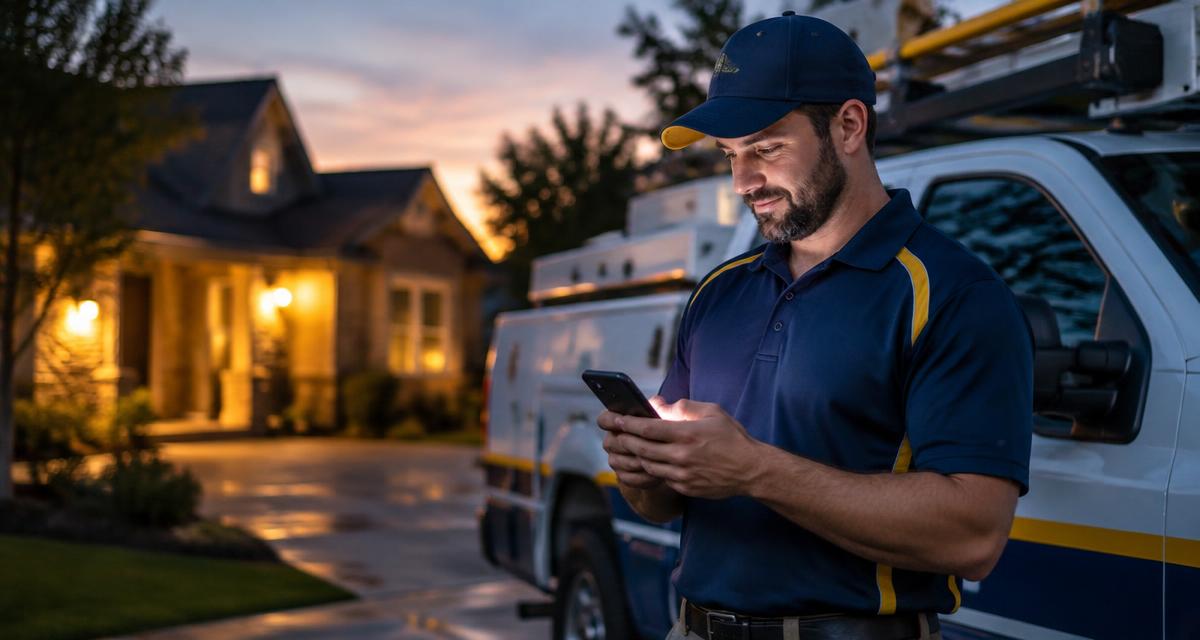
When a homeowner or property manager requests a quote, they are almost never asking just one company. They fill out two or three forms, maybe call a number they found on a truck, and then hire whoever makes them feel taken care of first. That is why response time is not a customer-service nicety for a local service business. It is a revenue number.
Most owners we talk to are not losing work because their pricing is wrong or their crews are bad. They are losing work that already cost them money to attract, because nobody was free to answer the phone at 2:15 on a Tuesday.
What actually happens in those first five minutes
A new lead is at peak intent the second they hit submit. They are still holding the phone. They are still annoyed about the leak, the dead AC unit, the collapsed retaining wall. They expect someone to call. That window closes quickly, and it closes in a predictable way.
- Minute 0-5: the lead is warm, expects contact, and usually answers an unknown number.
- Minute 5-30: intent starts cooling, and in a competitive market another company often reaches them first.
- Hour 1 and beyond: you are no longer the first conversation, you are the follow-up call.
- Day 2: the job is frequently already scheduled with someone else, even if you were the better fit.
There is a second effect that is easy to miss. The company that responds first also sets the frame for the entire conversation. They define what the job includes, what a fair price looks like, and what happens next. Everyone who calls later is arguing against a story that has already been told.
Why fast response fails without a system
Every owner already knows they should respond quickly. Nobody needs convincing. The problem is that speed depends on a human being available at the exact moment a lead arrives, and that human is usually busy earning revenue.
- A roofer is on a steep pitch with a nail gun in his hand.
- An excavator operator is in the cab, hearing protection on, unable to hear a ring.
- A plumber is on his back under a sink with both arms occupied.
- A cleaning company owner is walking a site with a crew lead.
- An HVAC tech is driving between calls in traffic.
None of those people should stop what they are doing to catch a form fill. The work in front of them is already paid for. But the lead should not sit either. That is the actual problem to solve.
Speed to lead is not about trying harder. It is about removing the human bottleneck between a new lead and the first response.
A five-minute response process you can actually run
1. Capture every lead in one place
Web forms, phone calls, missed calls, website chat, Google Business Profile messages, and paid ad leads should all land in one inbox. If leads live in five different apps, nobody owns the response, and the ones that go unanswered are invisible. You cannot fix a leak you cannot see.
2. Trigger an instant first touch
The moment a lead comes in, an automatic text and email should go out that confirms the request by name, says which company is contacting them, and tells them exactly what happens next. Something as plain as: "Hi Dana, this is ABC Roofing. We got your request about the leak on the north side of the house. A real person will call you in the next few minutes."
That message does two things. It stops the lead from continuing to shop, and it buys your team the breathing room to finish what they are doing before they call.
3. Route the human call fast
Automation opens the conversation. A person closes it. The lead should be assigned to a specific name, that person should be notified on their phone, and the callback should exist as a tracked task with a due time, not as a good intention. If everyone owns the lead, nobody does.
4. Qualify before you send a truck
A few short questions during that first call protect your schedule: what is the address, is it in the service area, what is the problem, is this an owner or a tenant, and how soon do they need it done. Ten minutes of qualification prevents a two-hour round trip for a job you were never going to win.
5. Keep following up until you get a real answer
Most booked jobs come after several attempts across text, call, and email. "No answer" is not a decision. A written cadence, run the same way every time, beats one voicemail and a shrug.
Common mistakes we see
- Treating missed calls as nothing. A missed call with no text-back is a lead handed to the next company on the list.
- Leaving the office phone as the only intake path while everyone is in the field.
- Letting the fastest responder be whoever happens to be free, so results swing week to week.
- Sending an automated message that sounds like a mass blast, with no company name and no human next step.
- Not recording what happened, so nobody knows whether response time is improving.
What to measure
- Median time from lead created to first outbound contact.
- Percentage of leads contacted within five minutes.
- Number of follow-up attempts per lead before you stop.
- Booked-job rate broken out by response-time bracket.
- Missed calls with no text-back sent.
Track those for one month and the leak in your pipeline stops being a guess. In most shops, tightening response time pays for itself before any additional ad spend does, because you are converting demand you already bought.
The bottom line
Speed to lead is revenue. Not because faster is a nicer way to treat people, though it is, but because the first credible response usually wins the job. The path is simple and it does not require you to stop working: lead comes in, immediate response, qualification, human follow-up, appointment, estimate, follow-up, booked job.
Build that once and it runs whether you are on a roof, in a crawlspace, or in the cab of a machine. That is the difference between chasing more leads and finally converting the ones you already have.
Stop Losing Leads. Start Building Better Systems.
MainStreet Systems helps local service businesses capture leads, respond faster, automate follow-up, stay organized, and turn more opportunities into booked revenue.
Get My Free Business Assessment