
Email Template for Following Up After a Quote
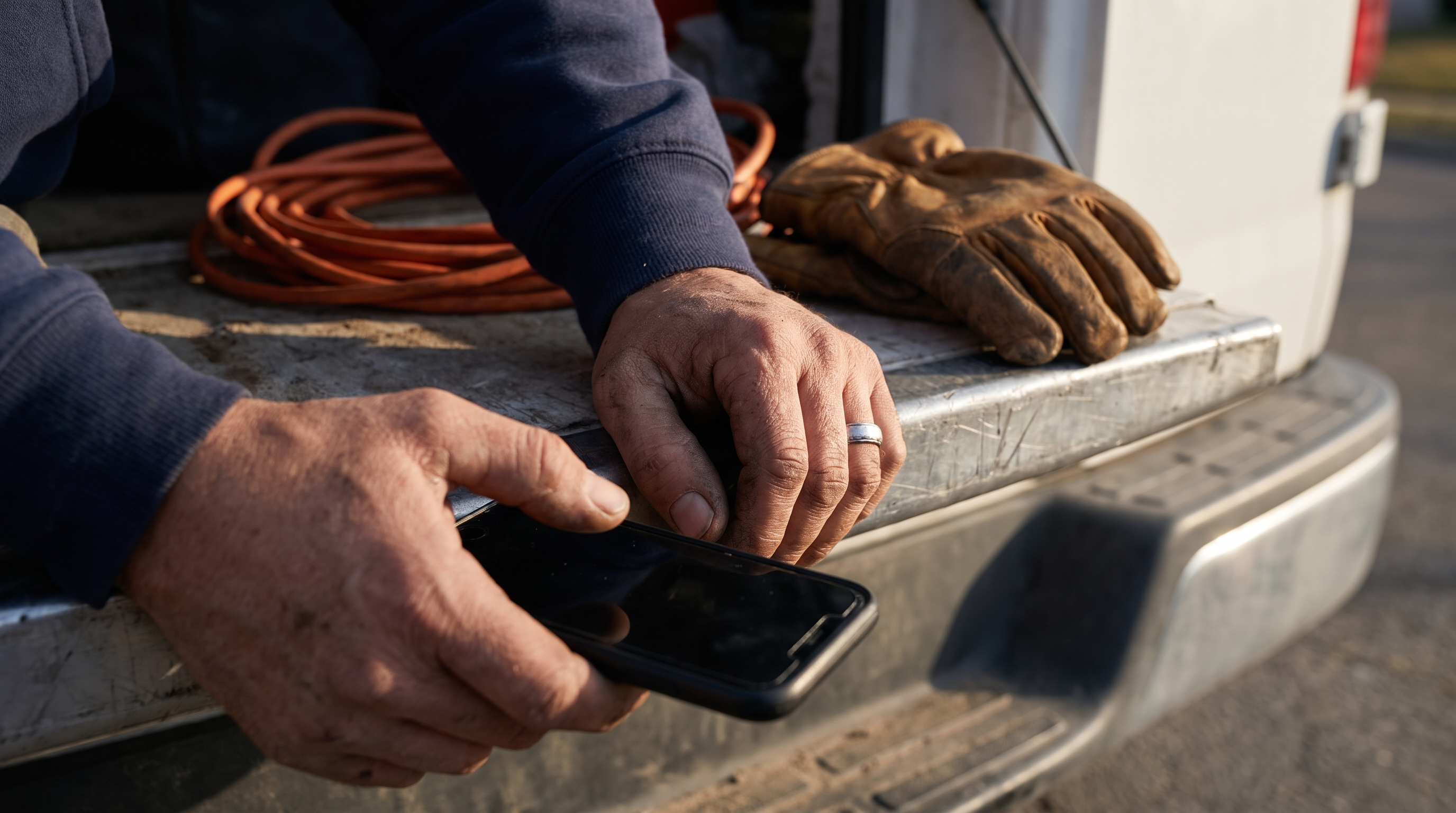
The estimate goes out on Tuesday. By Wednesday the crew is slammed, the phone will not stop, and nobody writes the second email. The customer did not say no. They got busy, started comparing prices, or are waiting for someone to make the next step easy, and a quiet customer is often a busy one. According to Stripo, even a single follow-up attempt increases your chance of a response by 11%, yet 44% of sales professionals stop after one attempt.
In a business with a few crews and a steady stream of estimates, this gets harder, not easier. Somebody has to own it, whether that is you, an office manager or a crew lead, and that person needs to know which quotes are still open. Otherwise a quote that should have been a booked job just sits there.
When should you follow up after sending a quote?
Send the first follow-up one to three days after the quote goes out, the second about a week after that, and a final one within two weeks. One published timing guide from Oppora lays out the same rhythm: the first follow-up goes 2 to 3 days after the quotation, the second 5 to 7 days later, and the final one 10 to 14 days later.
Here is that rhythm adapted for a service business.
| Touch | When | What it does | Template |
|---|---|---|---|
| First follow-up | 1 to 3 days after the quote | Confirms it arrived and invites one question | Template 1 |
| Second follow-up | About 5 to 7 days later | Adds something useful and keeps the job warm | Template 2 |
| Final follow-up | 10 to 14 days after the quote | Gives a clear next step or a clean exit | Template 3 |
Every row has a job. If a follow-up cannot say what it is for, do not send it yet.
Why bother sending more than one?
Because most people stop too early, and the reply usually goes to whoever kept going. Outreach reports that 90% of buyers respond within two days of their most recent message, while only 8% of sales reps follow up more than five times.
Those numbers come from sales teams in general, not from home service companies, so treat them as a direction and not a forecast for your business. We do not have measured follow-up results for our own customers to share yet.
Speed matters before the quote, too. The same logic that makes the first five minutes count for a new lead, covered in Speed to Lead: What Happens in the First Five Minutes, applies to the days right after an estimate goes out.
What should the first follow-up email say?
The first email should confirm the quote arrived and ask one easy question. That is all. You are not pitching again, and you are not asking for a decision. You are making sure the quote did not land in a spam folder and giving the customer a low-effort way to reply.
Short wins here. Oppora notes that short emails tend to get more replies because they can be read and understood quickly, often in under 30 seconds.
Template 1: the quick check (1 to 3 days after)
Subject: Your quote for [job, e.g. the back-yard retaining wall]
Hi [First name],
I sent over the quote for [job] on [day]. I wanted to make sure it reached you and that everything opened properly.
If anything in it is unclear, reply here or call me at [phone] and I will walk through it with you. Otherwise, I will check back in a few days.
Thanks, [Your name] [Company]
The last line matters. Telling the customer when you will be back in touch removes any sense that you are hovering, because they know what happens next.
What should the second follow-up email say?
The second email should give the customer something, not just ask for something. By day five or so, the quote has probably been read. If they were ready, they would have answered, so the real question is what is getting in the way.
Usually it is one of three things: price, timing, or a question they have not asked. Name those gently and let them pick.
Template 2: the useful nudge (5 to 7 days after)
Subject: Quick question on [job]
Hi [First name],
Quotes sometimes raise questions that do not come up until a few days later, so I wanted to check in.
If it helps, I can [adjust the scope / break the work into phases / go over what is included and what is not]. Our schedule for [month] is filling up, and I would rather tell you honestly where we are than leave you guessing.
Would a ten-minute call this week help?
[Your name] [Phone]
Only mention your schedule if it is true. A made-up deadline is a lie a real customer eventually catches, and it costs you the trust the quote was supposed to build.
How do you write a final follow-up without sounding desperate?
Make the next step obvious and the exit easy. The final email is a clean close, with no last-chance threat in it. You tell the customer you respect their time, and you leave the door open.
Template 3: the clean close (10 to 14 days after)
Subject: Should I keep [job] open?
Hi [First name],
I have not heard back on the quote for [job], so I am guessing the timing may have changed. That is completely fine.
If you would still like to move ahead, reply with "yes" and I will send the next step. If you would rather pause or go another direction, tell me and I will close this out on my end. Either answer helps.
Thanks for considering us. [Your name]
A reply of "not right now" is a good outcome. It is a real answer, and it lets you move that opportunity out of the "maybe" pile in your pipeline so your numbers stay honest.
What if the customer pushes back on price or wants more time?
Answer the actual objection, not a generic one. A short, specific reply beats a longer polite one.
If they say the price is high:
Hi [First name],
Thank you for being upfront. Price is a fair thing to weigh. If you tell me which part of the quote feels off, I can look at whether there is a smaller scope, a phased approach, or a different material that fits your budget better. I would rather find the right fit than push a number you are uneasy about.
[Your name]
If they say they need more time:
Hi [First name],
Of course, take the time you need. So I do not keep bothering you, is there a date that would make sense for me to check back? And if there is anything I can answer in the meantime, I am glad to.
[Your name]
Asking for a date respects their pace, and it gives you permission to follow up when that date arrives.
How do you keep track of which quotes are still open?
You need one place where every open estimate is visible, with a date and a next step. A follow-up template is only useful if you remember to send it. If quotes live in email threads, notebooks and memory, the second and third emails never happen, and that is how a quote gets forgotten. Our standard is simple: no quote forgotten.
Every open estimate should show when it was sent, who owns it, and when the next follow-up is due.
A simple list works if you keep it current. Columns for customer, job, date sent, last contact, next follow-up date and status are enough to start.
Automation can take over the repetitive part. A system can schedule the day-two email and the week-later email, and create a task when a customer replies. The conversation about the job stays with you or your team. If you wonder whether that can still sound like you, read AI Follow-Up Automation That Still Sounds Human.
What are the common mistakes with quote follow-up emails?
The biggest mistake is sending nothing. After that comes sending something that gives the customer no reason to answer.
Opening with "just checking in" is the classic one. It asks the customer to figure out why you wrote. Say what you are following up on and what you need from them.
Another is making every email longer than the quote itself. If the customer has to scroll, they will put it off, and put-off emails rarely get answered.
The third is changing the price in a follow-up without explaining the change. If the scope shifts, say what shifted. Otherwise the customer wonders what the first number really meant.
Last, do not treat email as the only door. A text or a quick phone call often lands better with a homeowner who is on their phone all day. If you send automated texts or marketing messages, make sure the customer has agreed to receive them and that every message honors a request to stop.
FAQ
How do you write a follow-up email after a quote?
Name the job, say when you sent the quote, and ask one easy question. Keep it to a few sentences, include your phone number, and say when you will check back. Do not restate the whole quote or ask for a decision in the first email.
How do you follow up on a quotation politely?
Give the customer an easy reply and a way out. Offer to answer questions, tell them when you will follow up next, and accept a "not right now" without pushing. Politeness here is mostly clarity and not hovering.
How often should you follow up after sending a quote?
Three touches usually cover it: one to three days after the quote, about a week later, and a final one within two weeks. If the customer gives you a date to check back, use theirs instead.
Is it better to email or call after a quote?
Either works, and the best answer is both. Send the email first so there is a written record, then call or text if you hear nothing. Match the channel the customer used when they first contacted you.
Your next step
Open your list of open quotes today, find the oldest one with no reply, and send Template 1 before you leave for the day. If you would like to see where your own follow-up is slipping, take the free two-minute Business Assessment. No pressure.
Stop Losing Leads. Start Building Better Systems.
MainStreet Systems helps local service businesses capture leads, respond faster, automate follow-up, stay organized, and turn more opportunities into booked revenue.
Get My Free Business Assessment