
HVAC Lead Follow-Up Automation That Books Jobs
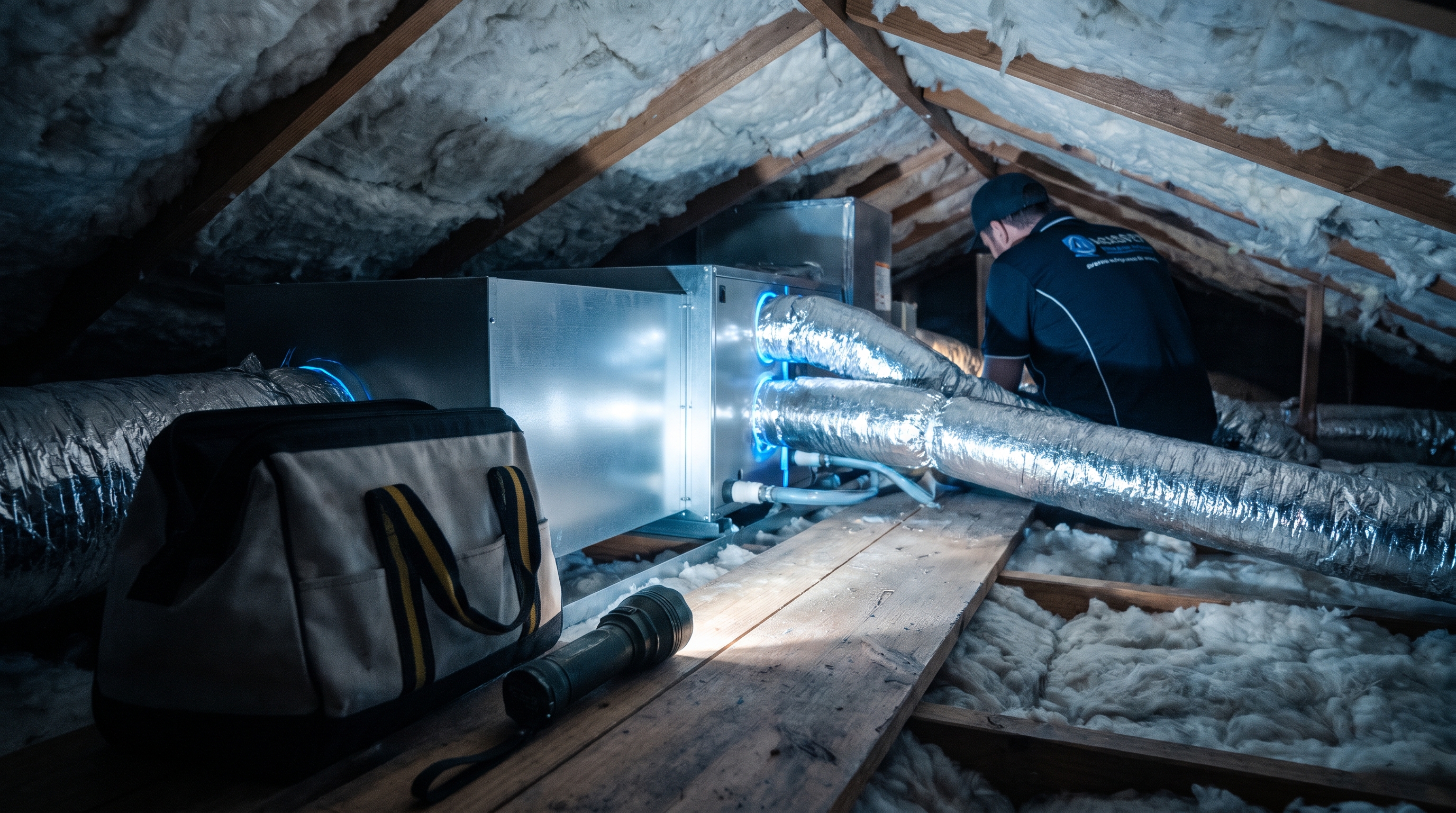
Your phone rings while you are in an attic, and you cannot pick up. The homeowner with a warm house calls the next company on the list, and the job is gone before you are back at the truck. According to Cogniagent, a vendor selling AI call handling to HVAC shops, "the average HVAC company takes over 2 hours to respond to a new lead," a figure the vendor itself credits to Hatch (2025). Every vendor number in this piece is a third party's estimate, so use it for scale and check it against your own jobs.
You already get the calls and the form fills. The trouble is what happens in the hours after.
Why does HVAC follow-up break down in the first place?
It breaks because the people who could follow up are busy doing the work. Your techs are in the field, your office staff is already on the phone, and you are quoting. Follow-up gets done when somebody remembers, and nobody remembers on the busiest days.
Speed is where it shows first. The same vendor says only 3% of HVAC companies reply within a minute, which means a basic automatic text puts you in a small group.
The quote is the second place. An estimate goes out, the customer says they will think about it, and the thread goes quiet. Nobody decided to drop it. It just fell off the list.
You already paid for the lead. Don't lose it now. We cover the wider version of this problem in Speed to Lead: Why the First 5 Minutes Matter and in One Follow-Up Isn't Enough, so the rest of this piece stays with HVAC.
What should you automate, and what should stay human?
Automate anything that is the same every time, and keep every conversation that needs judgment. Acknowledging a call, asking for an address, sending a reminder and asking for a review are identical from one customer to the next. Diagnosing a failing compressor, pricing a replacement and calming a customer with no heat are different every time.
| Moment | What goes out automatically | When | What your team handles |
|---|---|---|---|
| Missed call or new web lead | A text that says who you are and asks for the address and the problem | Within seconds | The callback, the diagnosis questions, the booking |
| Estimate sent | Short check-ins that offer to answer questions | Day 1, day 3, day 7 | Price talk, financing questions, scope changes |
| Job finished | A thank-you and a review request | The day after | Any reply that mentions a problem |
Look at the last column: every row ends with a person. The automation moves the conversation along until someone with judgment picks it up, and your team still decides what is wrong with the system and what it costs to fix.
How do you handle the missed call?
Send a text within seconds of the missed call, from your own number, in plain language. The goal is to keep the caller from dialing the next company. HelixEdge describes the same idea this way: "When you cannot pick up, the caller gets a text within seconds so they do not dial the next company on the list."
A good text sounds like someone on your crew wrote it. Something like this works:
Sorry we missed you. This is the team at [Company]. Reply with your address and what is going on with the system, and we will call you back as soon as we are out of the crawl space.
It does not promise a repair time, quote a price or pretend to be a technician. It tells the caller they have been heard and asks for the two facts your dispatcher needs anyway.
When the reply comes in, the lead should land in your CRM with a source, a time and a named owner. If it sits in a text thread on one person's phone, you have the same problem in a new place. Our post on missed calls and missed opportunities covers how to set that up.
Cogniagent also claims "each missed call represents $350-$1,200 in lost revenue depending on job type." Your own average ticket is the number that counts, so pull the last ten jobs you booked from calls and work it out.
How do you follow up after sending an estimate?
Send a short check-in on a schedule, and write each one so it is easy to answer. A common pattern is day 1, day 3 and day 7. Cogniagent describes it as "day-1, day-3, and day-7 nudges across the customer's preferred channel." You do not need that exact rhythm, but you do need some rhythm, because memory will not hold one through a July heat wave.
Quotes are where the money sits. According to FlowSystem AI, "most HVAC companies close between 20 and 35 percent of the estimates they send out." If that is even roughly right, most written quotes never turn into jobs, and some of those homeowners went quiet only because life got busy.
Each nudge should do one thing.
- Day 1. Say thanks for having you out, and ask if they have questions about the estimate.
- Day 3. Offer to walk through the options again, or to put the numbers in front of a partner or spouse.
- Day 7. Say you will keep the quote open and ask whether they would like you to hold a spot on the schedule.
A day-3 message might read like this.
Hi Sam, this is [Company]. Just checking whether the replacement quote made sense. If it would help to go over the two equipment options again, reply here and we will set up a quick call.
If the customer replies, the automation stops and a person takes over. If they say no, that ends the sequence too. Follow-up that ignores a "no" is where automation starts to feel like spam, so build the stop rule before anything else.
We go deeper on timing and spacing in Automated Lead Follow-Up: Timing, Spacing and Stop Rules, and on why the quote deserves this attention in The Estimate Isn't the Finish Line.
How long should an automated sequence keep going?
Keep it bounded and written down. Some vendors run follow-up for a month, and AfterLead says its system "follows up with every lead for 30 days." That may suit a shop with a steady flow of installation leads. For most owners, a week or two of spaced messages is enough, followed by a pause and a single later check-in.
Pick a window you would be comfortable explaining to the customer's face. If a homeowner would be surprised to learn how often you contacted them, you have gone too far.
What about the review request after the job?
Ask the day after the job, ask once, and make it one tap. The best moment is when the customer is still relieved that the house is cool again. A text with a direct link does more than an email buried three screens down.
Keep the wording simple.
Thanks for having us out today. If the visit went well, a quick review helps other homeowners find us. Here is the link. If anything was not right, reply here and we will fix it.
That last sentence gives an unhappy customer a private route to you before they take it public. Any reply that sounds unhappy should go to you or your office manager, with no further automated message in between.
This is also the moment to set up repeat work. A tune-up reminder in the fall, sent to people who already trust you, costs almost nothing. We cover the wider idea in The Job Is Done. Now What?.
What are the common mistakes?
The easiest one to spot is a message that reads like a form letter. If a text opens with "Dear valued customer," your caller will know nobody wrote it. Write the way your best dispatcher talks, and read each message out loud before it goes live.
A bot that quotes a price over text or guesses at a diagnosis creates a problem your team then has to undo. Keep pricing and diagnosis with people, and say so in the messages. "We will call to talk through the options" is a perfectly good line.
Consent gets forgotten more than it should. Every message should say who you are, and every "stop" reply should be honored right away. Ask whoever sets up your texting to check the consent rules that apply in your state, since this article is not legal advice.
Then there is the sequence nobody tests. Send a test lead through every path, including a missed call, a form fill and a quote, and look at what actually arrives on a phone. A broken step costs very little to find before a real customer hits it, and a great deal after.
And if nobody owns new leads today, a text-back only creates a faster pile. Decide who owns each lead first. Our post Who Owns the Lead? lays out how.
How does this fit your existing tools?
You do not have to replace your scheduling or dispatch software to do any of this. You need a place where every lead is recorded, a named owner for each one, and messages that fire from a trigger. If your current tools cannot do that, add the missing piece and leave the rest alone.
At MainStreet Systems, that is how we approach it. We set it up and we run it. The MainStreet Response Desk responds to new leads in under five minutes, follows up automatically and tracks each lead in one pipeline, with the exact response commitment, hours and lead sources set in each customer's written scope. We cannot promise it turns every inquiry into a customer, and we do not generate demand. It is built for companies that already get real inquiries and lose too many of them.
We do not have HVAC customer results to share yet, so we will not pretend to. What we can describe is the system and what it is meant to do.
FAQ
Will automated follow-up make my company sound like a robot?
It will if you let it. Write each message the way your dispatcher would say it, keep them short, and ask a question the customer can answer in a few words. Stop the sequence the moment someone replies, so a person takes over the conversation.
What should I never automate in HVAC?
Diagnosis, pricing, scope changes and any conversation with an unhappy customer. Those need judgment and trust. Automate the acknowledgment, the reminders and the check-ins, then hand off to your team as soon as the customer says anything that needs a real answer.
How fast should I respond to a new HVAC lead?
As fast as you can, and a text within seconds of a missed call is realistic. One vendor reports that only 3% of HVAC companies reply within a minute, per Cogniagent, so even a basic automatic text puts you ahead of most.
How many follow-ups should I send after an estimate?
Three is a reasonable start, spaced across about a week, such as day 1, day 3 and day 7. Stop when the customer replies, books or says no. Then decide whether one later check-in makes sense for your shop.
What to do today
Take ten minutes and call your own business number from a cell phone, then let it ring out. See what the caller gets. If the answer is nothing, write the one-sentence text you would want to receive and hand it to whoever sets up your phones. If you would like us to look at the whole path from missed call to booked job, the free two-minute assessment shows where leads slip through, with no commitment.
Stop Losing Leads. Start Building Better Systems.
MainStreet Systems helps local service businesses capture leads, respond faster, automate follow-up, stay organized, and turn more opportunities into booked revenue.
Get My Free Business Assessment